
Galvalume® Roofing: Composition, Performance, and Applications
Updated: Dec 15, 2025
Galvalume® Metal Roofing
For over 50 years, Galvalume® has been the primary material for metal roofing and wall systems, valued for its corrosion resistance, durability, and aesthetic appeal. From commercial projects to architectural facades, its performance has established it as a reliable choice for both panel manufacturers and builders.
Choosing the right material for an application is essential today. Contractors and architects need to understand not only Galvalume®’s core strengths but also how enhancements like Coastalume™ boost steel’s durability in coastal environments. This article covers the chemistry of Galvalume coating®, how to select appropriate coating weights, and key applications where it offers long-term advantages.
What Is Galvalume®
Galvalume® is produced by coating a carbon-steel substrate with an alloy of aluminum, zinc, and silicon in a continuous hot-dip process.

Coating Composition:
55% Aluminum: Protective barrier against moisture and pollutants.
43.4% Zinc: Sacrificial galvanic protection at cut edges and scratches.
1.6% Silicon: Improves adhesion and helps the coating resist cracking during roll forming.
This combination preserves steel’s structural integrity during fabrication. By forming a bond with the steel surface, the alloy shields it from environmental exposure over many years of use.
Available coating weights include:
AZ50: Standard for pre-painted architectural applications.
AZ55: Common for unpainted roofing and wall systems in inland areas.
AZ60: Heavier coating that improves corrosion resistance; used exclusively by Metal Alliance for Coastalume™, breakthrough steel protection for coastal installations.
The hot-dip process ensures the coating remains intact during roll-forming, making Galvalume® suitable for standing-seam panels, concealed-fastener systems, exposed-fastener profiles, and a wide range of architectural applications.

Characteristics of Galvalume®
Corrosion Resistance
Aluminum forms a barrier against moisture and pollutants, while the zinc component provides sacrificial protection against damage, such as scratches. This dual mechanism delays rust formation and prolongs the service life of panels in typical inland and industrial settings.
Strength and Formability
Galvalume® retains the inherent strength of steel, offering a high strength-to-weight ratio. Its adherent coating enables reliable roll-forming into a wide range of panel profiles without losing its protective qualities.
Durability
When specified for the right environment and installed as part of a properly engineered system, Galvalume® consistently delivers multi-decade service life. It also withstands high temperatures and environmental cycling, making it suitable for both large-scale and specialized applications.
Coastal Considerations
Galvalume® has historically faced challenges in salt-air marine environments due to accelerated corrosion. To address this, Metal Alliance offers Coastalume™, which combines AZ60 Galvalume® with Tedlar®, a protective PVF film, allowing for warranted use in marine conditions up to 300 feet from breaking surf, and no setbacks for brackish water sources like marshes and intercoastal waterways.
Specifications & Availability
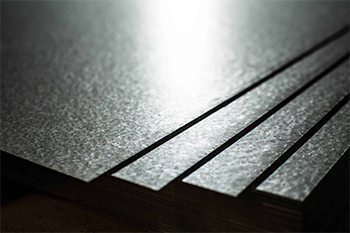
Metal Alliance supplies Galvalume® as coil and flat sheet for fabricators and contractors:
Variety of Coil Widths
4′ × 10′ Flat Sheets
Grade 50 Steel with a minimum yield strength of 50 KSI
Galvalume® Applications
Selecting the appropriate Galvalume® substrate for a project depends primarily on whether the metal will receive a painted architectural coating or be used in its natural, unpainted finish. Unlike a simple exposure-based decision, coating weight is closely tied to surface chemistry and paint adhesion requirements.
AZ50 is the standard substrate for painted PVDF, SMP, and FEVE systems.
AZ55 is generally used for unpainted, natural metal finishes, where paint adhesion is not a concern.
Coastalume® (AZ60 with a laminated Tedlar® film) is an engineered exception, as its bonded film does not rely on the exact adhesion mechanisms as paint.
These considerations inform material selection across standard roofing and wall system applications.

Architectural Roofing
Galvalume® is widely used in architectural standing-seam and concealed-fastener roofing.
Painted roofing systems typically specify AZ50, which provides the proper surface characteristics for long-term coating adhesion and weather performance.
Unpainted systems that require a natural metal aesthetic may use AZ55, which provides enhanced metallic coating protection without the need for architectural paint.
This allows project teams to match substrate performance with the intended finish system, ensuring dependable roof performance and consistent visual results throughout the building's life.
Wall Cladding & Façades
For architectural rainscreens, facades, and wall assemblies, the appropriate Galvalume® substrate depends on the finish requirement:
Painted wall systems → AZ50
Unpainted metal facades → AZ55
Both options offer smooth, consistent surfaces that support precise forming, clean seams, and reliable long-term appearance.
Retrofit & Reroofing
Galvalume® is commonly chosen for retrofit projects due to its compatibility with established panel profiles and modern factory-applied finishes.
Painted retrofit applications → AZ50
Unpainted retrofit systems → AZ55
This allows new panels to integrate into existing building envelopes with dependable visual and structural continuity.
Industrial & Agricultural Buildings
Industrial and agricultural facilities often face high humidity or airborne particulates. Galvalume® provides durable protection for these environments when correctly paired with the intended finish:
Painted panels → AZ50
Unpainted panels → AZ55
In painted systems, the architectural coating—not the heavier metallic layer—serves as the primary corrosion barrier, making AZ50 the appropriate substrate for most factory-finished panels in these markets.
Coastal Projects with Coastalume®
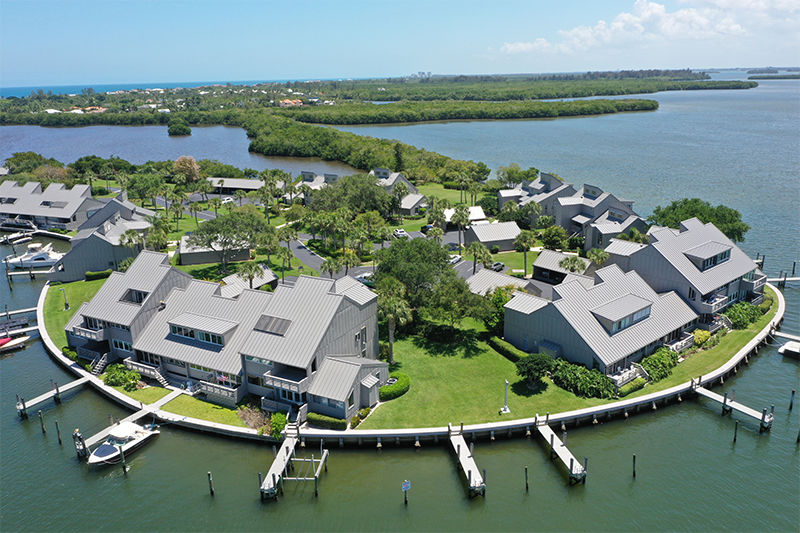
Coastalume® combines an AZ60 Galvalume® substrate with a laminated Tedlar® PVF film, creating a steel-based option engineered for high-exposure marine environments. Because Tedlar® is a bonded film rather than a paint system, it does not share the adhesion limitations associated with painted coatings on AZ55. This construction provides long-term protection against salt spray, UV exposure, and the continuous moisture typical of severe coastal climates.
Historically, aluminum was the preferred choice for coastal projects due to the limited salt-air performance of standard coated steel. Coastalume® expands its material options with a durable steel solution specifically designed for harsh marine conditions. Its enhanced coating weight and film-based surface protection provide superior weatherability, making it a suitable choice for projects that require both longevity and consistent aesthetic performance.
By aligning AZ50 and AZ55 substrates with inland or moderate-exposure applications, and reserving AZ60 with Tedlar® for high-corrosion coastal zones, contractors and specifiers can select the most appropriate substrate and finish combination for each project’s environmental demands while optimizing overall lifecycle value.
For over fifty years, Galvalume® has supplied the construction industry with a proven, versatile substrate for metal roofing and wall systems. By understanding its composition, strengths, and the importance of selecting the appropriate coating weight based on whether the material will receive a painted finish or remain unpainted, building professionals can specify systems that deliver durable, cost-effective performance.
With innovations like Coastalume™, Metal Alliance is expanding the proven benefits of Galvalume® into marine applications traditionally limited to aluminum, giving architects, contractors, and panel manufacturers more flexibility to deliver the durability and performance demanded in even the harshest environments.


